The Case Against Harry Goldenblatt
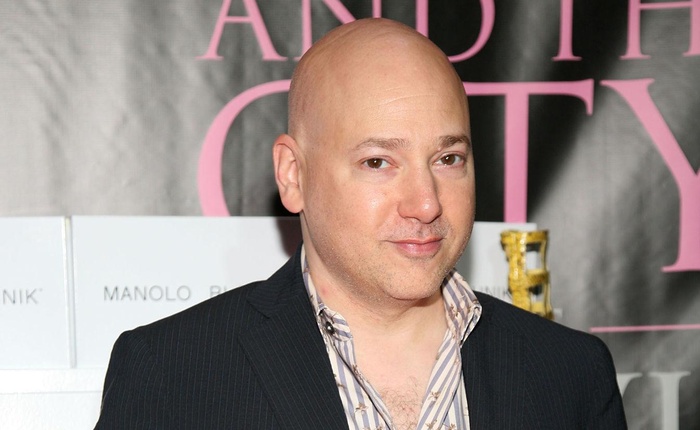
Harry Goldenblatt has long been one of the most, if not the most, beloved of Sex and the City’s characters, owing to his position as the oh-so-loving partner of perennial romantic, Charlotte York. To be fair, his competition is not exactly robust: most of the men on Sex and the City are varying degrees of terrible. Terrible men do, after all, make good television. Mr. Big strings Carrie along for years; Steve cheats on Miranda; Trey is emotionally constipated even before his marriage to Charlotte begins to disintegrate; Berger breaks up with Carrie on a Post-it. Suffice it to say, Harry Goldenblatt is hardly uniquely monstrous among them.
He does, however, happen to be uniquely overrated.
Indeed, somewhere along the way, Harry’s eventual success as a husband seems to have retroactively absolved him of virtually everything that preceded it. He loves Charlotte, true. He finds her beautiful, also true. He wants children with her, and is happy to adopt them if need be, true again. All of this is genuinely lovely. It also doesn’t change the fact that their great romance begins with behavior that ranges from inconsiderate to, in at least one respect, breathtakingly inappropriate.
As this post is largely a reflection of my thoughts on both Sex and the City and its sequel series, And Just Like That…, please note that it will contain unmarked spoilers.
The Legal Profession’s Moral and Ethical Standards
Recall for a moment, if you will, how Harry and Charlotte first met. More to the point, recall that Harry is an attorney — and not just any attorney, but a divorce attorney; and not just any divorce attorney, but Charlotte’s divorce attorney.
The legal profession, as I know quite intimately, is one of the most stringent when it comes to regulating the ethical conduct of its members. In order to qualify as a sitting attorney, we take multiple tests meant to evaluate or otherwise regulate our moral fitness to practice, the most notable being the Multistate Professional Responsibility Examination (MPRE). We have to engage in continuing legal education, of which a certain percentage must be ethics based, in order to maintain our licenses.
When Harry meets Charlotte, she is not a woman sitting across from him at a bar. She is his firm’s client, and he becomes her divorce attorney. A person going through a divorce, at least in theory, is emotionally and financially in a uniquely vulnerable position. Her attorney, conversely, occupies a uniquely powerful one. He is entrusted with intimate information about her marriage, her finances, her vulnerabilities and the dissolution of one of the most important relationships of her life. Naturally, Harry decides this (or at least, the immediate aftermath of this) would be a good time to sleep with her.
Harry’s borderline-predatory wooing of Charlotte is, quite literally, the reason that we take so many of these exams. I find it nothing short of astonishing that viewers idealize their courtship and ensuing relationship while treating this detail as essentially incidental. Strip away the swelling music and the show’s insistence that Harry is Charlotte’s unlikely Prince Charming, and the premise sounds less like a great romance than the beginning of a professional-responsibility hypothetical: A divorce attorney begins pursuing a former client romantically almost immediately after representing her through the dissolution of her marriage. Discuss.
Yet because we know where the story eventually ends — with a loving marriage, two children and one of the show’s comparatively few stable homes — we tend to judge the beginning through the glow of everything that comes afterward.
A Difference of Religion
Equally frustrating to me was Harry’s handling of his religious requirements for marriage. Whether by accident or design (and let’s be honest, it was completely, totally, by design), he neglected to inform Charlotte that he required his partner to share his faith until the two were already romantically involved.
Now, there is nothing wrong with wanting to be with a partner who shares your religious beliefs — indeed, I know from personal experience just how difficult it can be when two people differ on matters of faith. I learned that lesson rather memorably at 23, in my first serious relationship, when I discovered that stating a deeply held conviction at the outset and being assured it was understood does not necessarily prevent someone from spending the ensuing relationship trying to negotiate it away. Suffice it to say, I have little patience now for people who treat another person’s clearly stated boundaries — or their own conveniently unstated ones — as problems to be dealt with only after emotional attachment has set in.
And that, rather than Harry’s preference itself, is my problem with him. Harry did not discover midway through their relationship that marrying within his faith mattered more to him than he had anticipated. He knew from the beginning that he would not marry a non-Jewish woman. He knew Charlotte was not Jewish. And he knew, or certainly ought to have known, that Charlotte York, of all people, was not exactly dating for the casual companionship. Yet he pursued her anyway, withholding the one piece of information that fundamentally changed what their relationship could become. Harry knew that the relationship, as constituted, had no future. Charlotte did not.
That distinction matters. Had Harry been forthright from the outset, Charlotte could have decided for herself whether she wanted to become involved with a man who would never marry her unless she converted. Perhaps she would have dated him anyway, would have even considered conversion on her own, eventually. What matters, though, is that the choice would have been hers to make.
Instead, Harry waits until Charlotte is already emotionally invested before revealing the fine print. Suddenly, she is not deciding in the abstract whether she would ever convert for a hypothetical husband; she is deciding whether she is willing to convert for Harry, a man she already loves and does not want to lose. Those are not remotely equivalent decisions.
Nor is the change Harry requires of her a trivial one. Charlotte doesn’t merely agree to attend the occasional Shabbat dinner or promise to raise hypothetical children Jewish. She converts: she studies Judaism, learns Hebrew, abandons traditions she loves (who could forget the poignant scene where she bids farewell to her collection of Christmas ornaments?) and embraces an entirely different religious identity. To Charlotte’s enormous credit, she ultimately takes the conversion seriously; what begins because of Harry becomes something she genuinely commits herself to. But the sincerity of Charlotte’s eventual conversion does not retroactively excuse the circumstances under which the choice was first presented to her.
Remarkably, the show does seem to acknowledge there is a problem here. Charlotte herself eventually asks the question that Harry should have had to answer much earlier. If he knew from the beginning that he could not marry her, if he knew that their relationship could never progress unless she fundamentally changed something about herself, then why did he pursue her at all?
Harry’s answer?
“Because I Couldn’t Not”
When Charlotte asks Harry why he ever even kissed her at the beginning of it all, knowing as he did that he could never marry her, he replies:
“Because I couldn’t not kiss you. Not sleep with you. Not see you. Believe me, I never thought a shiksa a goddess like you would fall for a putz like me.”
It is a half-baked non-answer that the writers clearly meant to come across as romantic. The uglier truth is that it is no such thing; rather, it is an obsequious, borderline manipulative excuse that — when I first heard it — made me roll my eyes so hard that for a moment I thought I saw my own brain (not really, but you get the idea). Because I couldn’t not is not a justification that would hold up in any respectable court of law. Just imagine, if you will, somebody on trial for a violent crime of some sort; and in their defense they say because I couldn’t not. I couldn’t not beat the guy, your honor. Oh, you poor thing.
In fact, Harry’s answer rather neatly encapsulates my entire problem with his courtship of Charlotte. He knew something she did not. He knew that there was a hard limit on their relationship, one that could be removed only if she made a substantial sacrifice. Rather than tell her that before she became invested, he pursued her because he wanted her—and when eventually asked to account for that decision, he offers his desire for her as though it were its own moral defense.
There is something undeniably flattering about being told that another person found you so irresistible that all his better judgment simply evaporated. I understand why the writers thought that “because I couldn’t not” sounded swoon-worthy. But irresistible attraction is not a waiver of responsibility toward the person to whom you’re attracted. Sometimes caring about someone requires exercising precisely the restraint Harry congratulates himself for being unable to muster.
Perhaps this is the lawyer in me talking, but “I knew better; I simply wanted to very badly” has never struck me as a particularly compelling defense.
The Happy Ending Problem
None of this means that Harry does not eventually become a good husband. He does, and that, I suspect, is precisely why his reputation has become so untouchable. Because, it must be said, Harry adores Charlotte. He supports her through infertility, is thrilled to build a family with her. Their marriage is warm, affectionate and enduring. And after spending six seasons watching Charlotte chase a very particular vision of romantic perfection — the handsome, wealthy, impeccably mannered WASP husband who turns out to be Trey MacDougal — there is something satisfying about watching her discover happiness with a man who looks nothing like the person she thought she was supposed to marry.
But the thematic neatness of that story has done something peculiar to our memory of Harry himself. Because Charlotte’s rejection of superficiality represents growth, Harry becomes good. Because Trey was wrong for her, Harry becomes right in seemingly every respect. Because their marriage succeeds, the way Harry pursued her becomes romantic retroactively. Now, I am perfectly willing to stipulate that Harry Goldenblatt ultimately becomes a loving husband. I object only to the proposition that this retroactively makes him an exemplary romantic partner from the moment he wanders into Charlotte’s divorce proceedings.
Which brings me, somewhat belatedly, to Miranda and Steve.
The Couple They Chose Instead
I understand the problem the producers of And Just Like That… faced when they returned to these characters decades later. As Alan Ball famously said, “Happy relationships are boring. We all want them in our own life. But I don’t want to watch them on TV.” Fair enough — a series does need conflict, after all, and there are only so many storylines one can wring from watching happily married people continue to be happily married. So, fine, perhaps somebody had to go; but what I cannot understand is why, of the show’s two great surviving marriages, the writers chose to dismantle Miranda and Steve.
Their relationship had accumulation, something Harry and Charlotte’s has always lacked for me. Over the course of three seasons, Steve makes Miranda, a woman who spends much of the original series deeply suspicious of romantic sentiment, believe in love despite herself. Their relationship grows, fails and grows again. They have a child neither of them expected they could conceive, build a family, even move out of the city proper. Miranda, wonderfully, is the one who asks Steve to marry her. They separate after his infidelity and eventually choose each other again.
If And Just Like That… had its heart set on sacrificing one of its predecessor series’ established happy marriages on the altar of interesting television, I wish it had looked a little harder at the other one. I must admit here, that I’m likely a bit biased: as an attorney with more than a little of Miranda’s instinctive cynicism about romance, I have always had a particular soft spot for the fact that Steve didn’t simply fulfill a dream she already had. Loving him made her reconsider what she thought she knew about herself; and when she finally chose marriage, she chose it so completely that she was the one who proposed. For me, that has always been the more satisfying love story.
Harry and Charlotte may very well deserve the happy marriage they ultimately built. But if we’re handing out titles for Sex and the City’s great romantic hero, I would like the record to reflect my strenuous objection.
The content of this post constitutes an expression purely of my personal opinion. The various facts and quotations referenced in support of it have been cited to their proper sources. If you see any errors in any of the factual references made, please let me know.


Leave a Reply